While the most effective way to help aid an afflicted person’s survival is by directly removing the tumor by performing a surgery, there are a variety of drugs that can be used to help reduce the effects of these hormone producing tumors. The primary drug used to treat these tumors is called streptozotocin, a naturally occurring alkylating antineoplastic agent that has been shown to be toxic towards ß-cells1. This toxicity makes it an ideal drug to treat a variety of pancreatic neuroendocrine tumors. It was first administered in 1968, to a 59 year old female patient who had reported hypoglycemic symptoms that were often relieved with eating. After being admitted in the hospital, laparotomy showed that she had a mass growing on her pancreas–the aforementioned insulinoma2. She was originally treated with diazoxide, but reacted harshly, leading the doctors to test the effects of streptozotocin as an alternative. After an initial wave of nausea, the patient no longer experienced episodes of hypoglycemia and was able to be left overnight without food and following a four months of treatment with streptozotocin (April-August) the patient was free of complaints. She was also able to regain 11 kg that were lost to the hypoglycemic conditions brought on by the insulinoma2.
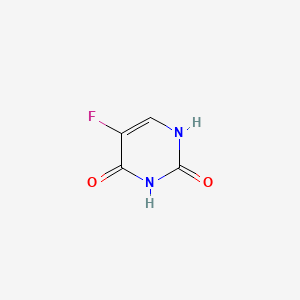
Eventually, streptozotocin was found to be more efficient when coupled with other cancer drugs like fluorouracil. Coupling streptozotocin with fluorouracil has been shown to help increase the length of time in which a patient survive3. The median survival rate of a study carried out in 1980 showed that the coupled treatment resulted in patients surviving 26 months as opposed to 16.5 months when only given streptozotocin. There were also thirteen patients who survived for over a year when given the coupled treatment as opposed to only seven patients that survived over a year when given only streptozotocin3. Coupling fluorouracil with streptozotocin also shows evidence of being equally toxic to streptozotocin. The study concluded that the nausea and vomiting side effects traditionally seen with phenothiazine drugs were not heightened by the coupled treatment as an equal number of patients reported nausea and vomiting on a scale that ranged from mild to severe3.
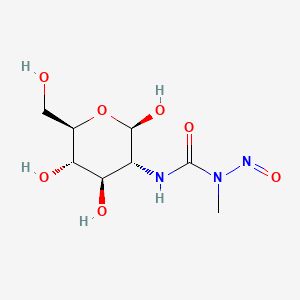
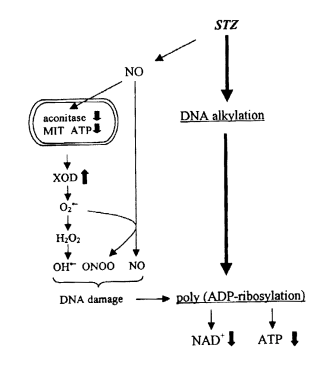
The mechanism for streptozotocin is also well understood. Figure 2 shows the mechanism within the cell that results in cell death. The source of its toxicity comes from the damage it does to DNA, similar to other alkylating agents, specifically how the drug forces an alkyl group to form on nucleic bases and break aromaticity. The alkylation of DNA causes the cell to induce the poly (ADP-ribose) polymerase (PARP), which leads to the depletion of cellular NAD+. The loss of NAD+ causes a decrease in ATP production pushing the cell to cell death4. While this is occurring in the genome, at the same time streptozotocin also creates the reactive oxygen species, superoxide, that harm DNA as well. Streptozotocin acts as a nitric oxide donor, NO is released when streptozotocin is metabolized by the cell. The increased concentration of NO in the cell helps to generate superoxide. Reactive oxygen species are dangerous because they carry electrons that can react and cause harm throughout the body4. The way that streptozotocin enters the cell is through the GLUT2 receptor. These receptors are found in abundance within pancreatic islet cells as a major endocrine role that they play is regulation of blood glucose levels4. Due to the structural similarities of glucose and streptozotocin, it makes it a perfect drug to target pancreatic neuroendocrine cells.
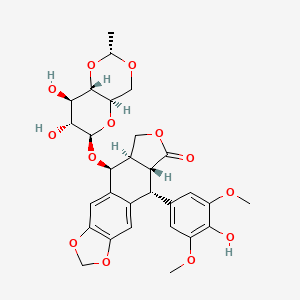
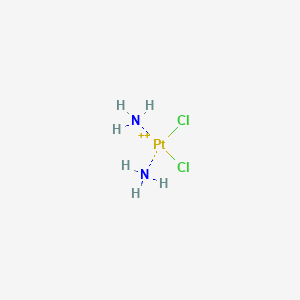
Another treatment option for patients afflicted with pancreatic neuroendocrine tumors is a combination of two, more general, cancer drugs etoposide and cisplatin. Due to pancreatic tumors bearing a resemblance to small cell lung cancer, Moertel et al. hypothesized that the aforementioned combination should bear fruitful results5. The specific study used a sample size of 45 patients with a variety of cancers; 18 of which had a type of pancreatic neuroendocrine tumors. The group found that after 4 week dosage cycles of the drug combination, 3 out of the 18 patients entered full remission, 9 out of the 18 patients entered partial remission, and 6 out of the 18 patients had their tumor growth stabilized. Progress to remission took about an average of 8 months5. Although this treatment group was very small in comparison to other studies, this study showed another successful combination of cancer drugs to help combat pancreatic neuroendocrine tumor as well as an approach to planning new treatments. That approach being comparing the tumor cells with more understood cells and basing treatment options off those similarities.
This combination of therapeutics also resulted in much more severe side effects. Out of all the patients treated; 13 of the 45 reported severe nausea, 9 of the 45 reported severe vomiting, and the entire group experienced hair loss5. This is expected as etoposide takes a much more aggressive approach to its attack on cancer cells in comparison to streptozotocin. Etoposide helps force errors in DNA synthesis and promote apoptosis by forming a complex with DNA and topoisomerase II, which helps to relax DNA supercoils. The drug prevents topoisomerase II from religasing the DNA that strand that have been relaxed, causing breaks throughout the DNA6. These breaks lead to issues that eventually kill the cell. The difference between streptozotocin and etoposide that I believe leads to more cases of severe side effects is that etoposide is less selective of the cells it attacks. As stated before, streptozocin has an affinity for the GLUT2 receptor which is found primarily on ß-cells while etoposide has not been shown to have a specific receptor it binds to. This could lead to etoposide entering cells other than the targeted tumors at a higher rate than streptozotocin leading to the afflicted experiencing worse side effects. Streptozotocin serves as a pillar that in order to treat pancreatic neuroendocrine tumors effectively with the least amount of harm, is to be as specific as possible.
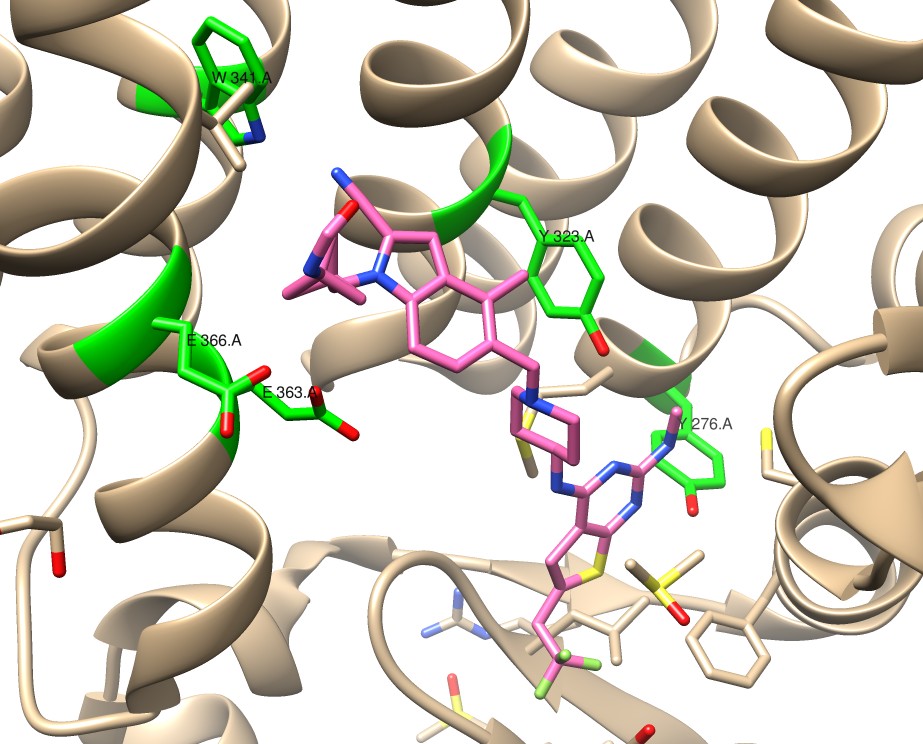
This point brings us back to the MEN1 gene. As touched upon in the previous section, the protein coded by MEN1, menin, is a key protein in the formation of pancreatic neuroendocrine tumors. Small molecule inhibitors of the complexes formed by menin have become prevalent recently as viable options for cancer treatment. A variety of inhibitors of the menin-MLL1 complex have been synthesized to target leukemia, all of which have relatively low IC50 values7. Figure 6 shows how the synthesized drugs bind to the menin binding pocket. IC50 values are quantitative measurements of how much of a drug is needed to inhibit 50% of a protein population–the lower the IC50 the better. Although this might be a complex that leads to leukemia, I also mentioned in the previous section that the menin-MLL1 binding pocket and menin-JUND binding pocket share the same binding motif, meaning that these complexes interact in very similar ways. It is possible that these drugs or drugs with similar structures can play a role in inhibiting the menin-JUND complex and help treat and inhibit the growth of pancreatic neuroendocrine tumors.
This concludes my story about pancreatic neuroendocrine tumors as well as my undergraduate biochemistry experience at Muhlenberg College and now with the bittersweet feeling of graduating I’m going to be pursuing my PhD in chemistry and New York University. Writing about this form of cancer meant a lot to me as my grandfather passed away in 2012 due to this cancer, so the opportunity to research this cancer and understand it further really was an experience I enjoyed as it reminded me a lot about him. On that note, thank you for reading this project, I hope you enjoyed it, and please leave a comment!
1 – Vavra, J. J.; Deboer, C.; Dietz, A.; Hanka, L. J.; Sokolski, W. T. Streptozotocin, a New Antibacterial Antibiotic. Antibiot Annu 1959, 7, 230–235.
2 – Murraylyon, I. TREATMENT OF MULTIPLE-HORMONE-PRODUCING MALIGNANT ISLET-CELL TUMOR WITH STREPTOZOTOCIN. The Lancet 1968, 292 (7574), 895–898. https://doi.org/10.1016/S0140-6736(68)91058-1.
3 – Moertel, C. G.; Hanley, J. A.; Johnson, L. A. Streptozotocin Alone Compared with Streptozocin plus Fluorouracil in the Treatment of Advanced Islet-Cell Carcinoma. N Engl J Med 1980, 303 (21), 1189–1194. doi.org/10.1056/NEJM198011203032101.
4 – Szkudelski, T. The Mechanism of Alloxan and Streptozotocin Action in B Cells of the Rat Pancreas. Physiol Res 2001, 50 (6), 537–546.
5 – Moertel, C. G.; Kvols, L. K.; O’Connell, M. J.; Rubin, J. Treatment of Neuroendocrine Carcinomas with Combined Etoposide and Cisplatin. Evidence of Major Therapeutic Activity in the Anaplastic Variants of These Neoplasms. Cancer 1991, 68 (2), 227–232. https://doi.org/10.1002/1097-0142(19910715)68:2<227::AID-CNCR2820680202>3.0.CO;2-I.
6 – Pommier, Y.; Leo, E.; Zhang, H.; Marchand, C. DNA Topoisomerases and Their Poisoning by Anticancer and Antibacterial Drugs. Chemistry & Biology 2010, 17 (5), 421–433. https://doi.org/10.1016/j.chembiol.2010.04.012.
7 – Lei, H.; Zhang, S.-Q.; Fan, S.; Bai, H.-R.; Zhao, H.-Y.; Mao, S.; Xin, M. Recent Progress of Small Molecule Menin–MLL Interaction Inhibitors as Therapeutic Agents for Acute Leukemia. J. Med. Chem.2021, 64 (21), 15519–15533. nteraction Inhibitors as Therapeutic Agents for Acute Leukemia. J. Med. Chem. 2021, 64 (21), 15519–15533. https://doi.org/10.1021/acs.jmedchem.1c00872.
ALL STRUCTURAL IMAGES FROM PUBCHEM

Hi David, great work! In Figure 2, you show the binding pocket of menin which binds to JUND and MLL1 and in Figure 6, you show the binding of a synthetic inhibitor to what appears to be a fairly similar binding pocket (I believe there is even a common key residue, E363). Does the synthetic inhibitor interfere with the binding of JUND/MLL1, or does this inhibitor bind specifically to a complex of menin-MLL1/JUND? Or is it something else entirely? Thanks!
Hi Alex, good to hear from you! The synthetic inhibitor binds to the menin active site. This active site is what forms the menin-MLL1 complex, and this complex from synthesizing more proteins. When menin and MLL1 come together, they form a transcription factor of sorts and helps methylation of histone H3. By inhibiting menin, you prevent the formation of the transcription factor. As you can imagine, a mutated form of this complex promotes transcription without regulation allowing the tumor to proliferate so stopping this interaction has been shown to be key in leukemia, and could potentially serve as an option for pancreatic neuroendocrine tumors!
Do surgical procedures increase survival rates?
Hey Dad. Yes, surgery increases 10 year survival rate by about 60% if the tumor is caught early enough and isn’t malignant or reaches metastasis. Tumors like non functional pNETs (pNETs that don’t produce any peptides) and insulinomas (insulin producing pNETs) tend to be belligerent and are almost a guaranteed survival when caught. However, if you have a tumor like glucagonoma (glucagon producing pNETs) or gastrinoma (gastrin producing pNETs) which tend to be more malignant can cause more issues and be harder to fully remove through surgery.
Great work outlining currently available therapeutics and congrats on NYU! The field of cancer treatment is rapidly expanding into a new region of biologics, including antibodies, cell therapies, and RNA vaccines. Could you elaborate on the potential therapeutic efficacy of biologics in the context of these neuroendocrine tumors. Specifically, are there conserved, unique, or indispensable antigens or neoantigens that could serve as viable targets. Is the tumor microenvironment immune privileged? Also do current treatments result in insulin deficiency or the manifestation of type 1 diabetes?
Thanks for your comment Jake! This one was a little tough as I’m not familiar as familiar with antigen treatments as I am with small molecule drugs. However, a bit of extra research showed me that there are a hand full of immunotherapy biologics including the check point inhibitors pembrolizumab. I found that from this review article from 2019 (10.21037/tgh.2019.12.18) that looks into treatment for the entire umbrella of neuroendocrine tumors and includes pNETs as a treatment option with pembrolizumab. This resource(10.1530/ERC-18-0494), also from 2019, concludes that PD-L1 could be viable as a potential immunotherapeutic target. One last source I found from 2020 (10.3389/fonc.2020.00831) provides pretty much a list of all the know biomarkers within the array of pNETs that can be present. Feel free to read more if you’re curious! And for your question regarding insulin levels. A specific type of tumor, insulinoma, is responsible for the overproduction of insulin in the body, so the goal of most treatments of insulinoma is to lower the levels of insulin rather than raise them. I mention in my Signs of Disease page that the manifestation of diabetes, type I or II, are very rare in patients with insulinoma. I found this pretty surprising as you’d expect a tumor that messes with the regulation of insulin to cause diabetes!
Thank you for your thorough response. Really incredible work done here. It is true that the PD-1 PD-L1 axis is among the best targets for checkpoint blockade. I will take a closer look at the signs of disease page, Thank you!
Hi David,
Nice job on this. What are the strategies or treatments to reduce the effects of the superoxides generated by streptozotocin?
Thank you,
Brian
Hi Brain! Recently, a lot of the literature has been pointing towards superoxide dismutase mimetics to help break down reactive oxygen species like superoxides. Some of the species that have been synthesized include compounds like GC4419, MnTE-2-PyP, MnTnHex-2-PyP, MnTnBuOE-2-PyP. All of these compounds have a manganese core that helps to catalyze the superoxides that are produced as well as a 6-8 ring structure with 4 nitrogen atoms helping to keep the manganese core in place. This is used in cancer treatments, but due to the structure of streptozotocin, it’s also a common diabetes drug to help lower insulin. In recent studies, rats that have diabetes have been given amount of naturally occurring antioxidant sources, like pomegranate seeds, and actually saw a decrease in the effects of superoxides on the body! So maybe in future studies, patients being treated with streptozotocin could also be given fruits and other sources of antioxidants to help decrease their superoxide levels.